
- Metal-freeno grey line at the gum
- 5–6 daysin Istanbul
- 15+ yrsexpected service with care
- Front & backsuitable for both
What zirconia crowns are
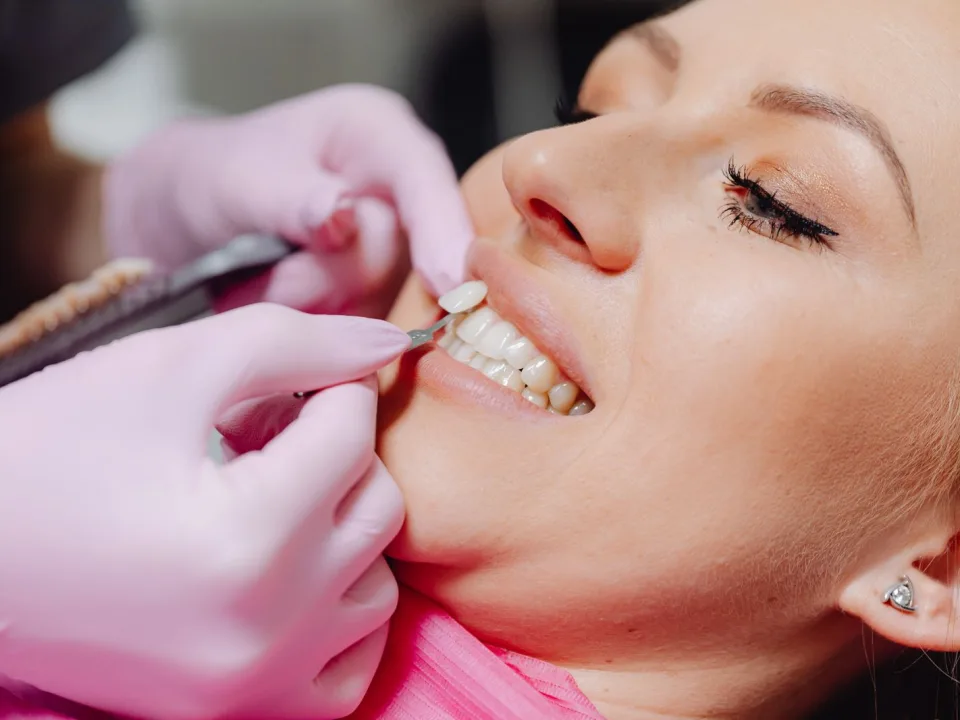
Zirconia crowns in Istanbul are full-coverage restorations milled from zirconium dioxide, a dense ceramic with the highest fracture strength of any tooth-coloured material in everyday dental use. A crown caps the whole tooth, so it is chosen where a tooth has lost too much structure for a veneer — after a large filling, a root canal, a fracture or years of wear — or where chewing forces are high.
Because there is no metal substructure, light behaves more naturally at the gum margin and the dark line that older metal-ceramic crowns develop does not appear. Zirconia is also biocompatible and does not corrode, which is one reason it is the standard material for implant-supported crowns.
Who zirconia crowns suit
- Back teeth that carry chewing load, especially in patients who clench or grind
- Teeth with large old fillings or root canal treatment that need protection from fracture
- Replacing failing metal-ceramic crowns with a visible grey margin
- Crowns on dental implants, including full-arch bridges
- Front teeth with dark cores or metal posts, where an opaque material masks the shade
When E-max or a veneer is the better choice
A single front tooth that must match a translucent neighbour is often better in E-max. A front tooth that is sound but discoloured may need only a veneer. Zirconia is chosen for strength; where strength is not the issue, a more translucent or more conservative option usually wins. The final plan is decided after examination.
Step by step: how a zirconia crown is made
- Examination: the tooth is assessed for decay, cracks and the health of the pulp. Any root canal or gum treatment comes first.
- Design: for smile-zone cases, a digital design and mock-up set the shape before preparation.
- Preparation: the tooth is shaped under local anaesthetic to leave uniform space for the ceramic, and a digital scan is taken.
- Provisional: a temporary crown protects the tooth and holds the bite while the laboratory works.
- Milling and finishing: the crown is milled from a zirconia block, sintered, and either polished or layered with porcelain for the front.
- Try-in and cementation: fit, contact points and bite are checked before the crown is cemented and the bite finalised.
Monolithic versus layered zirconia, and how it compares with E-max
Monolithic zirconia is milled as a single piece and polished. It is the strongest option and is preferred for molars and for anyone who grinds. Layered zirconia has a thin porcelain veneer applied over the zirconia core for a more natural surface at the front, at the cost of a slightly higher chance of chipping in the porcelain layer. Newer multilayer translucent zirconia narrows the gap, offering a gradient from a darker neck to a more translucent edge in one block.
- Zirconia: strongest, more opaque, ideal for back teeth, bridges and implant work.
- E-max: glass ceramic with higher translucency; the aesthetic choice for front teeth, but less suited to long bridges and very heavy bites.
- Metal-ceramic: still used in some settings, but the metal margin and reduced light transmission are why we prefer all-ceramic options.
How long zirconia crowns last
Zirconia crowns commonly serve for fifteen years or more. The crown itself rarely fails; what fails is the tooth beneath it if the margin is not kept clean, or the cement seal if the bite is left high. Daily brushing along the gum line, flossing around the crown, and a hygiene review every six to twelve months are what protect the margin. A night guard is advised for grinders, and polished zirconia should be used against opposing natural teeth to avoid wear. See aftercare for the days after cementation.
Alternatives to a zirconia crown
A tooth with moderate damage may be restorable with a large ceramic filling or an onlay that covers only the worn cusps, preserving more of the tooth. A front tooth that is sound may need only a veneer. A tooth that is fractured below the gum line is sometimes better extracted and replaced with a single implant than crowned. Each of these is considered before a full crown is recommended.
Visit plan for patients travelling to Istanbul
Single crowns and small groups are completed in five to six days: examination and preparation on the first two days, laboratory time in the middle, and cementation on the last. Larger cases combining crowns with implants are staged over two visits. Travel, accommodation and scheduling details are on the international patients page.
Risks and what to watch for
Short-term sensitivity to temperature after preparation is expected and settles. A small proportion of heavily restored teeth develop pulp inflammation and need root canal treatment later; this is disclosed beforehand where the risk is high. Chipping of a porcelain layer is possible with layered zirconia and is avoided in grinders by using the monolithic form. Any lasting pain on biting, or a crown that feels high, should be adjusted early rather than left.
Related reading
How it works at Habibler Clinic
- AssessmentSend an X-ray or photos; we reply with a written outline.
- Examination & 3D scanClinical check and imaging confirm the plan and timeline.
- TreatmentSessions are scheduled together, in the order agreed.
- Follow-upWritten aftercare and scheduled check-ups.