
- Glass ceramiclithium disilicate
- 5–6 daysin Istanbul
- 10–15 yrsexpected service with care
- Smile zonefront teeth and premolars
What E-max crowns are
E-max crowns in Istanbul are made from lithium disilicate, a glass ceramic that combines good strength with a translucency close to natural enamel. The same material is used for veneers, onlays and single crowns, which is why it is the mainstay of the aesthetic zone: the front teeth and the premolars that show when you smile. Where zirconia is chosen for load, E-max is chosen for light.
A lithium disilicate crown can be pressed or milled, then stained and glazed or layered with a thin porcelain surface for extra depth. Because it is bonded adhesively rather than simply cemented, it also reinforces the prepared tooth, which allows a slightly more conservative preparation than a conventional crown.
Who E-max crowns suit
- A single front tooth that needs full coverage and must match its natural neighbours
- Front teeth with old, discoloured crowns or large composite restorations
- Front teeth that are cracked, heavily worn or root-canal treated but not darkly discoloured
- Premolars in the smile line where translucency matters more than maximum strength
- Part of a smile makeover alongside veneers, where some teeth need full coverage
When zirconia is the better choice
Molars, long bridges, implant-supported bridges and patients with heavy grinding are usually better served by zirconia. A tooth with a very dark core or a metal post may show through E-max; zirconia or a masking core is used instead. The final plan is decided after examination.
Step by step: from shade matching to bonding
- Examination and records: the tooth, its neighbours and the gum line are assessed; photographs and a scan are taken.
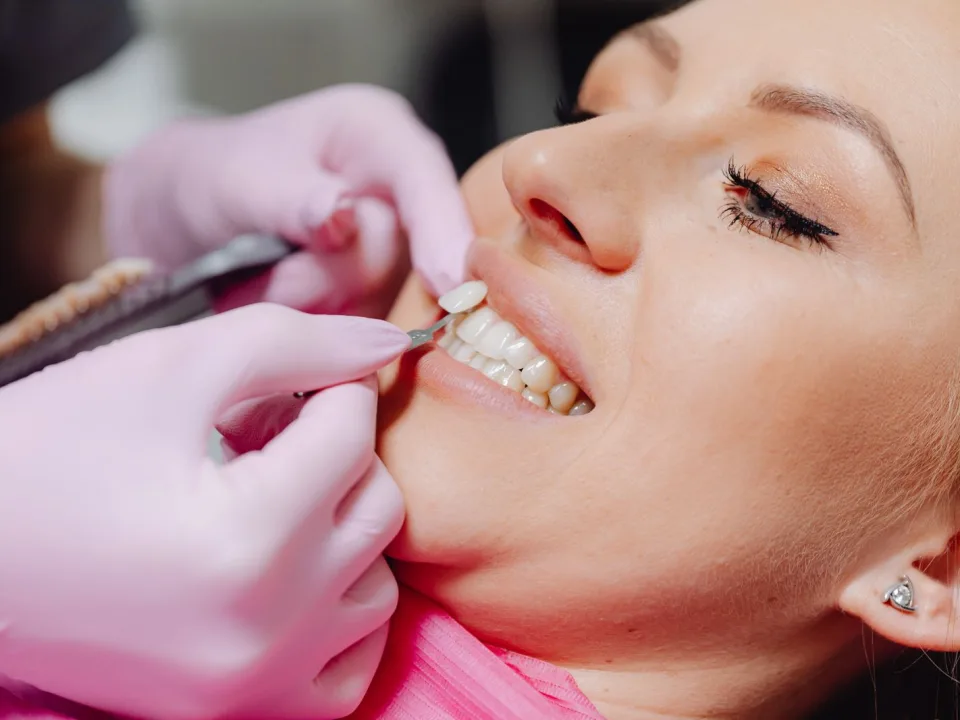
- Shade mapping: shade is recorded in daylight at three levels of the tooth — neck, body and edge — with the tooth hydrated, and photographed with a reference tab for the laboratory.
- Design and mock-up where shape changes: in smile-zone cases the new form is trialled before preparation.
- Preparation: a conservative reduction under local anaesthetic, followed by a digital scan and a provisional crown.
- Laboratory: the crown is pressed or milled, characterised and glazed to the shade map.
- Try-in and adhesive bonding: the crown is checked with try-in paste to fine-tune the final shade, then bonded and the bite adjusted.
E-max versus zirconia versus veneers
The three options sit on a scale from most conservative to most robust. Choosing between them is about how much tooth remains and how much force it bears, not about which is best in general.
- Porcelain veneer: front surface only; the choice when the tooth is sound and only its face needs to change.
- E-max crown: full coverage in glass ceramic; the choice when a front tooth is compromised but appearance is the priority.
- Zirconia crown: full coverage in the strongest ceramic; the choice when load, span or masking take precedence over translucency.
E-max veneers and onlays
The same lithium disilicate is used for veneers and for partial-coverage onlays on premolars, which means a whole smile can be built in one material family for consistent shade and surface texture.
How long E-max crowns last and how to care for them
Well-bonded E-max crowns commonly serve ten to fifteen years and often longer. The material does not stain or discolour, so the visible difference over time comes from the natural neighbours changing shade, not the crown. Care is ordinary: brush twice daily, floss around the margin, and attend a hygiene review every six to twelve months. A night guard is advised for anyone who clenches. See aftercare for the first days after bonding.
Alternatives to an E-max crown
A front tooth that is discoloured but structurally sound may need only whitening or a veneer. A small chip can be repaired with composite. A tooth that has become dark after root canal treatment can sometimes be internally bleached before a decision on a crown is made. Each smaller option is offered first when it can reach the result.
Visit plan for patients travelling to Istanbul
An E-max crown or a small group of crowns is completed in five to six days: examination, shade mapping and preparation on the first two days, laboratory time in the middle, and try-in and bonding on the final day. Single-tooth matching cases may need an extra try-in appointment, which is planned within the same stay. See the international patients page for arrangements and the treatment journey for the full sequence.
Risks and what to watch for
Temperature sensitivity for a few weeks is common. Glass ceramic is strong but less tolerant of heavy grinding than zirconia; in those patients a night guard is not optional. A crown that feels high after bonding should be adjusted promptly. Because E-max is translucent, a shade mismatch on a single tooth is the most common aesthetic issue, which the shade map and try-in stage are designed to prevent.
Related reading
How it works at Habibler Clinic
- AssessmentSend an X-ray or photos; we reply with a written outline.
- Examination & 3D scanClinical check and imaging confirm the plan and timeline.
- TreatmentSessions are scheduled together, in the order agreed.
- Follow-upWritten aftercare and scheduled check-ups.