
- 0.3–0.7 mmtypical reduction
- 5–6 daysin Istanbul
- 2 visitspreparation and bonding
- 10–15 yrsexpected service with care
What porcelain veneers are
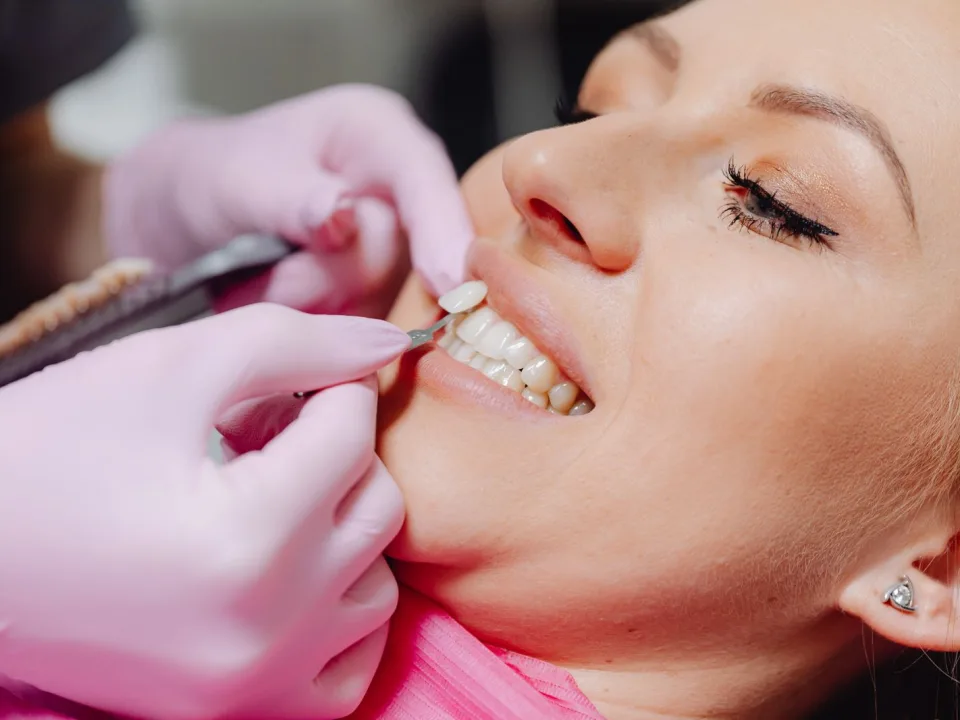
Porcelain veneers in Istanbul are thin ceramic laminates, usually between a third and two thirds of a millimetre thick, bonded to the front of the teeth. They correct colour, close small gaps, lengthen worn edges and mask mild irregularities, all while keeping most of the natural tooth intact. They are the material of choice for the front six to ten teeth in a smile makeover when the underlying teeth are sound.
The strength of a veneer comes from bonding to enamel. That is why the preparation is planned to stay within enamel wherever possible: the thinner the veneer and the more enamel preserved, the more durable the bond.
Who porcelain veneers suit
Veneers work best on teeth that are structurally sound but cosmetically compromised. The list below covers the cases we most often treat with veneers rather than crowns.
- Discolouration that whitening does not reach, including fluorosis and mild tetracycline staining
- Small gaps between the front teeth
- Chipped, worn or short incisal edges
- Mild crowding or rotation where orthodontics is declined
- Old composite bonding that has stained or worn
When veneers are not the right choice
Teeth with large old fillings, previous root canal treatment or heavy wear from grinding usually need the full coverage of an E-max or zirconia crown. Active gum disease or decay is treated first through general dentistry. The final plan is decided after examination.
Step by step: how veneers are planned and placed
- Examination and records: photographs, intra-oral scan, X-rays and an assessment of enamel thickness and bite.
- Digital design and mock-up: the new shape is trialled in your mouth as a temporary overlay before any preparation.
- Preparation: guided by the mock-up, so only the amount of enamel that the design requires is removed. Local anaesthetic is used.
- Provisionals: temporary veneers in the approved shape protect the teeth and let you test the result.
- Laboratory: veneers are made in ceramic to the approved model over two to three working days.
- Try-in and bonding: each veneer is checked dry, then with a try-in paste for shade, before adhesive bonding and a final bite check.
Veneers versus E-max and zirconia crowns
The three materials differ in how much tooth they cover and how much light they let through. Veneers cover the front surface only; crowns wrap the whole tooth.
- Porcelain veneers: minimal reduction, highest translucency, dependent on sound enamel for bonding.
- E-max crowns: full coverage in a glass ceramic; nearly the same optical quality as a veneer with more strength for damaged front teeth.
- Zirconia crowns: full coverage in the strongest ceramic; more opaque, so best for back teeth, heavy bites and dark cores.
Composite bonding as a lighter alternative
Composite can be sculpted directly onto the tooth in a single visit and repaired easily. It suits small chips and gaps, but it stains, loses gloss and wears sooner than porcelain, so it is usually a medium-term choice rather than a long-term one.
How long veneers last and how to care for them
Veneers bonded to enamel commonly last ten to fifteen years, with many lasting longer. Porcelain does not stain, but the tooth beneath and the cement line can, so brushing twice a day with a non-abrasive paste, daily flossing and hygiene reviews every six to twelve months are the whole regime. A night guard is made for anyone who clenches or grinds. Avoid biting ice, pens and nails; those habits chip natural teeth too. See our aftercare page for the first two weeks after bonding.
Visit plan for patients travelling to Istanbul
Veneers are usually completed within five to six days. Day one covers examination, records and the design conversation; day two the mock-up and, if approved, preparation with provisionals; days three to five are laboratory time, during which you are free; the final day is try-in and bonding. Practical details for flights, transfers and follow-up are on the international patients page, and general questions from overseas patients are answered separately.
Risks and what to watch for
Cold sensitivity in the first weeks is common and fades. Debonding is rare when the bond is to enamel, but more likely if a veneer is placed largely on dentine or on a tooth that takes heavy edge-to-edge force. A veneer that chips can often be polished or repaired; one that fractures is remade. Persistent bite discomfort after bonding should be checked rather than tolerated. Over-preparation to gain thickness is the most common design error and is avoided by working from the mock-up.
Related reading
How it works at Habibler Clinic
- AssessmentSend an X-ray or photos; we reply with a written outline.
- Examination & 3D scanClinical check and imaging confirm the plan and timeline.
- TreatmentSessions are scheduled together, in the order agreed.
- Follow-upWritten aftercare and scheduled check-ups.


